

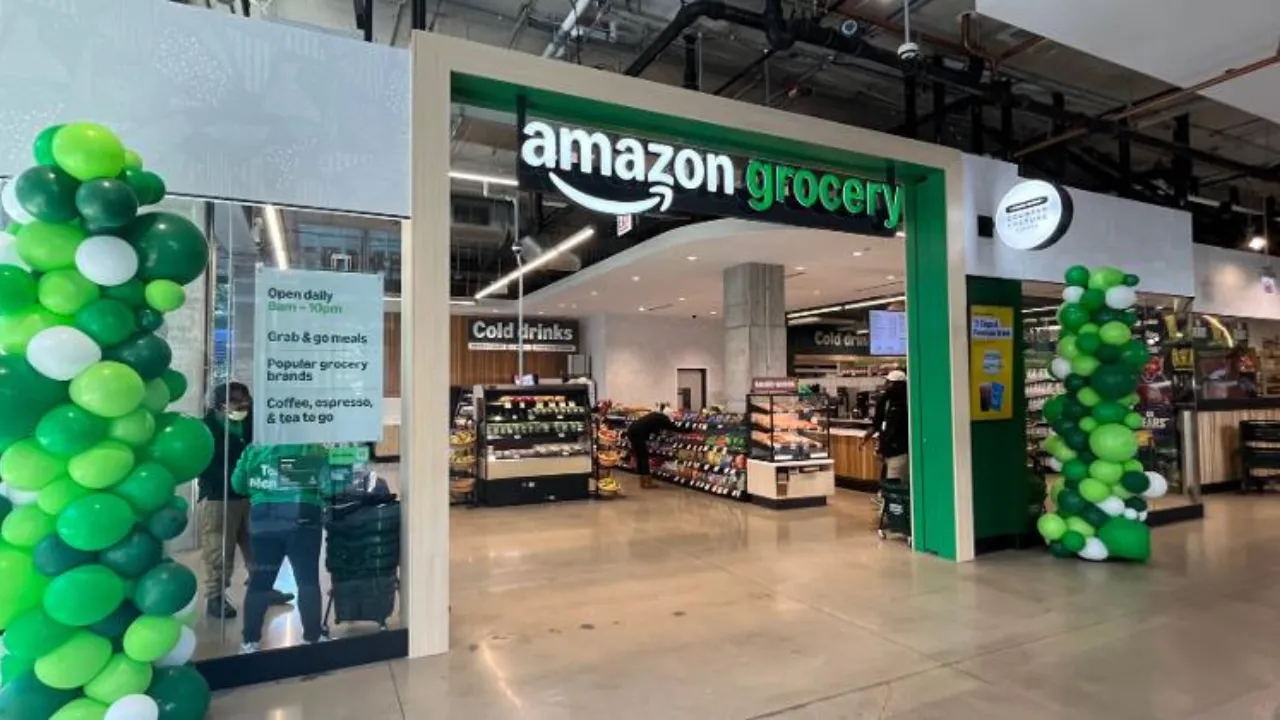
On October 1st, 2025, Amazon announced the launch of Amazon Grocery, a unified private-label grocery brand combining products from its existing Amazon Fresh and Happy Belly lines. The new brand debuts with over 1,000 items, most priced under $5.
What Amazon Grocery Includes
The initial lineup spans a full range of categories: milk, olive oil, fresh produce, meat, seafood, snacks, and pantry staples. Amazon also introduced new items such as cinnamon rolls, refrigerated pizza dough, and bottles of spring water. In the coming months, Amazon plans to roll out frozen pasta meals, granola, pie fillings, and expanded deli meat options.
In parallel, Amazon has already started relabeling items online. Many products previously under the Amazon Fresh or Happy Belly labels now bear the new Amazon Grocery branding, with cleaner, more modern packaging intended to help users easily identify the line.
Strategic Purpose and Consumer Pressures
Amazon framed the move as a response to growing consumer price sensitivity. In its announcement, the company noted that grocery inflation and tighter household budgets make value-focused options more relevant than ever.
The Amazon Grocery effort builds on momentum: private-label grocery products on Amazon saw a 15% increase in sales in 2024 across Amazon.com, Whole Foods, and Amazon Fresh. The new brand will compete directly with retailers’ private-label programs such as Walmart’s Great Value and Target’s Favorite Day.
Amazon’s logistics and delivery infrastructure bolster this initiative. Many Amazon Fresh grocery items under Amazon Grocery will be available both online and in physical Amazon Fresh stores. The company has also expanded same-day grocery delivery to 1,000 U.S. cities, with plans to double that by year-end.
Challenges and Context
While the strategy is bold, Amazon faces challenges. In the U.K., Amazon recently shuttered all of its Fresh stores after evaluating operations. Fast Company That move reflects risk in scaling physical supermarket presence.
Another tension lies in brand differentiation. Amazon already has the Amazon Saver brand offering bargain staples, and 365 by Whole Foods (the parent’s private label). The new Amazon Grocery brand must coexist with those without creating confusion.
Amazon must also maintain quality perceptions. Offering low prices may draw consumers in, but brand trust depends on consistency, taste, packaging, and supply chain reliability.
What It Means for the Grocery Landscape
This launch signals Amazon’s push to capture more of the grocery market’s value and margin. Private-label products often allow retailers to attain higher margins and more control over the sourcing and branding.
In the U.S., private-label penetration remains lower than in European markets, but consumer trends toward discount and store-brand goods may shift that balance. Retail analysts view Amazon Grocery as a move to solidify brand loyalty, increase basket share, and pressure legacy grocers to respond more aggressively.


