
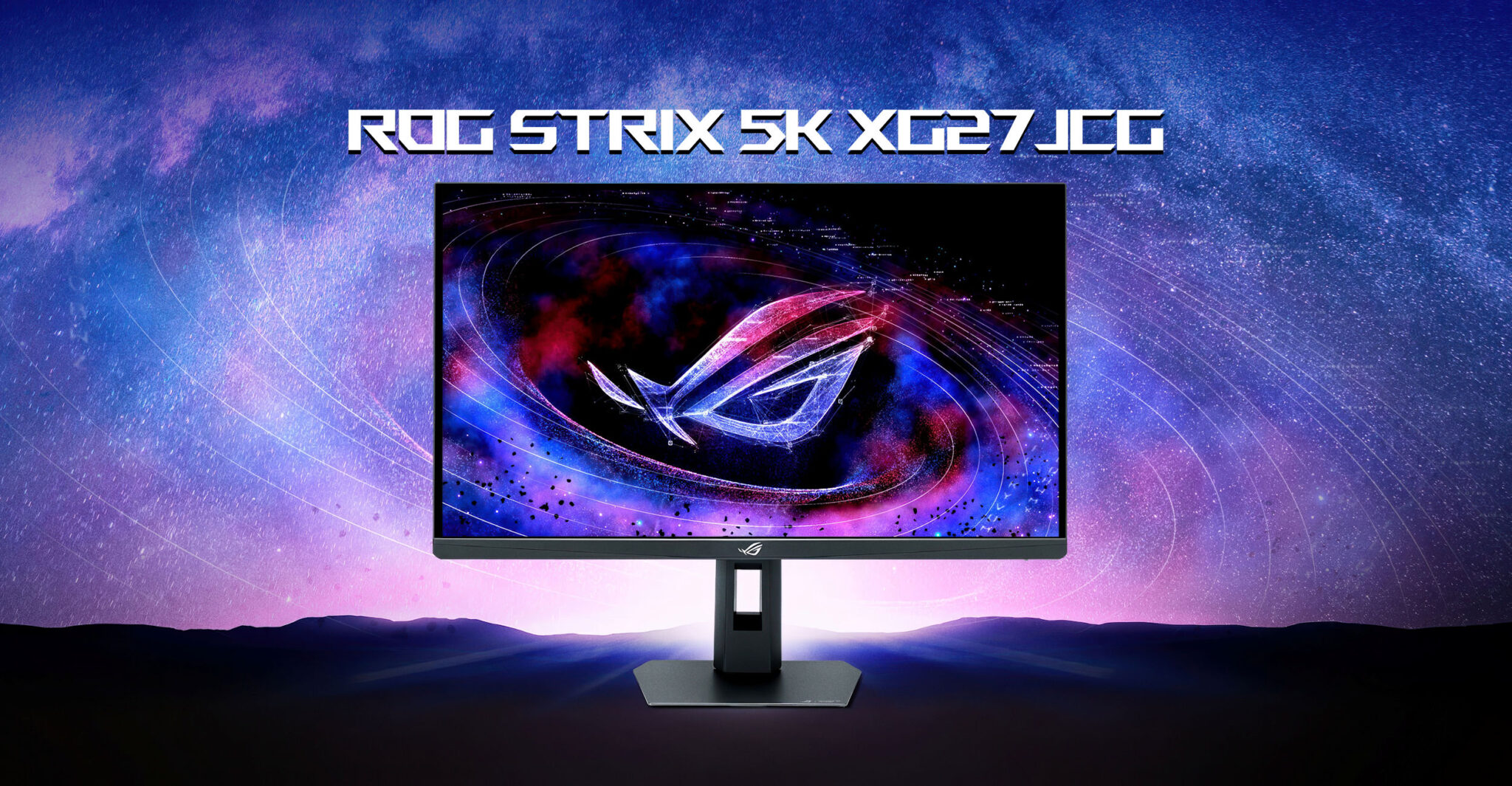
ASUS has quietly introduced what may be one of the most ambitious gaming monitors yet, the ROG Strix XG27JCG. This 27-inch display pushes performance into new territory by combining ultra-high resolution with extreme refresh rates. Instead of sticking to standard 4K or QHD formats, ASUS built this panel to support 5K gaming at up to 180 Hz, while also offering a dual-mode option that switches to QHD at up to 330 Hz for ultra-fast competitive play. The result is a single monitor designed to serve both visual fidelity and speed-focused gamers.

At its highest setting, the monitor runs at 5120 × 2880 resolution, delivering sharper text, finer detail, and significantly more desktop space than 4K. When frame rate matters more than resolution, users can switch modes and drop to 1440p while unlocking a blistering 330 Hz refresh rate. That flexibility is rare in today’s monitor market and positions the XG27JCG as a hybrid display rather than a one-purpose panel.
ASUS notes that the full 5K at 180 Hz configuration is intended for the newest generation of graphics hardware. Due to bandwidth and compression limitations, many older GPUs, including RTX 40-series and earlier cards, are not officially supported for that top mode. The high-speed QHD mode remains compatible with a wider range of systems, making the monitor usable even if you are not running the latest hardware.
The XG27JCG uses a Fast IPS panel with a claimed 0.3 ms response time, aimed at reducing blur and ghosting during fast motion. It supports variable refresh technologies, including AMD FreeSync Premium and NVIDIA G-SYNC compatibility, and carries DisplayHDR 600 certification for improved brightness and color performance compared to standard SDR gaming monitors. ASUS also includes its Extreme Low Motion Blur Sync technology to help maintain clarity across different frame rates.
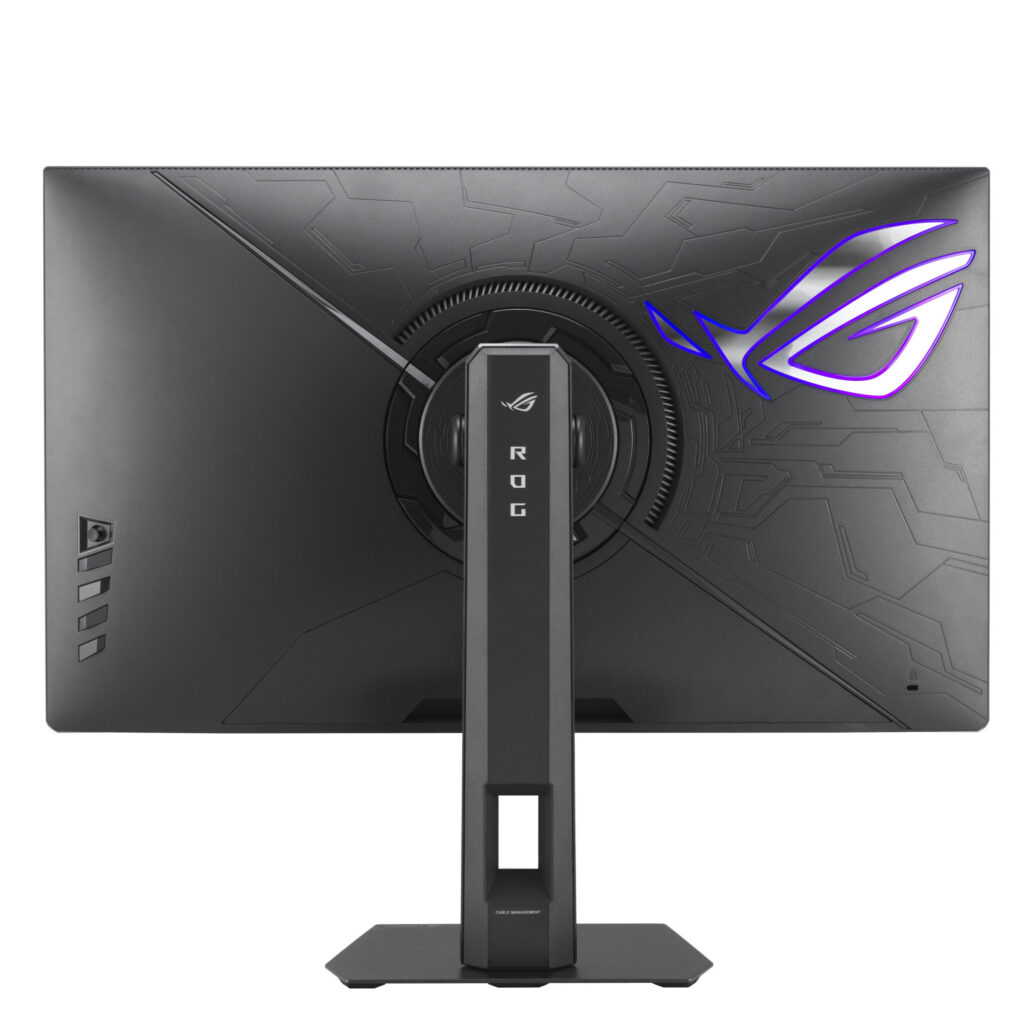
Connectivity is built for modern setups. The monitor includes multiple HDMI 2.1 ports, DisplayPort 1.4 with Display Stream Compression, and a USB-C port capable of carrying video and power delivery. Ergonomic adjustments allow for height, tilt, swivel, and pivot, making it suitable for long gaming sessions or productivity work.
What makes this display stand out is its positioning. Very few monitors attempt to bridge cinematic-level resolution with esports-grade refresh rates. ASUS is clearly targeting enthusiasts who want flexibility rather than compromise, even if that means demanding cutting-edge hardware and accepting a likely premium price. With a broader reveal expected at CES 2026, pricing and availability should become clearer soon.