


A customer at a GameStop in Grapevine, Texas traded in a rare, mint-condition Pokémon card on December 1, 2025, walking away with $30,494.70. That marks the highest single trade-in payout the retailer has ever recorded. The card was a 2003 PSA-graded “PSA 10 Holo Gengar,” a version highly prized among collectors. GameStop said the card’s fair-market valuation was $33,883. After inspection and verification it completed the payout under its Power Packs buyback program. The company called the trade “the most valuable single trade-in ever recorded in GameStop history.”
The trade-in came just before GameStop’s planned “Trade Anything Day,” when the company encourages customers to bring in old items in exchange for store credit or cash. To highlight the significance, GameStop stated, “Any trolls who publicly claim that GameStop trade-in values are bad are hereby factually and demonstrably incorrect.” They added their usual slogan: “Power to the players.”
For longtime critics of GameStop’s trade-in program — who are used to seeing pennies on the dollar for games, consoles, or accessories — this payout must feel like a cosmic glitch. Historically, the company is known for offering tiny credit amounts for older games or devices, but in this case they shelled out tens of thousands of dollars. That kind of payout is so rare it practically rewrites the manual: suddenly the trade-in counter looks less like a clearance rack and more like a jackpot machine.
Although this payout stands out, analysts and collectors noted that flipping the card on the open market — say via auction — might have earned the owner a bit more. Still, for a trade-in at a major retailer, this deal signals that high-end trading cards can fetch cash, not just store credit.
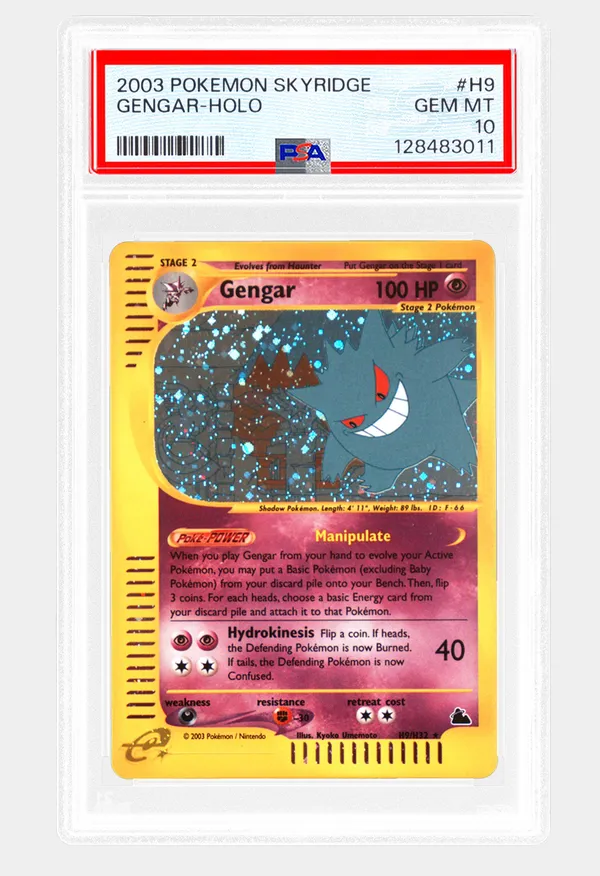
The PSA-10 Holo Gengar is part of a vintage set printed during a broader resurgence of interest in the Pokémon Trading Card Game. Demand for rare first-print, foil, and high-grade cards has surged. This trade shines a light on how collectible cards have moved beyond nostalgia: they now carry real monetary value, and some collectors treat them like investments.
GameStop’s decision to complete such a high-value payout may also shift how people view trade-in programs. It proves rare, high-value items can be accepted under the right conditions — and that trade-in value doesn’t always mean settling for store credit. For anyone sitting on older collectible cards, this could be a reminder to check their condition and consider whether a trade-in or sale might be worth pursuing.


