
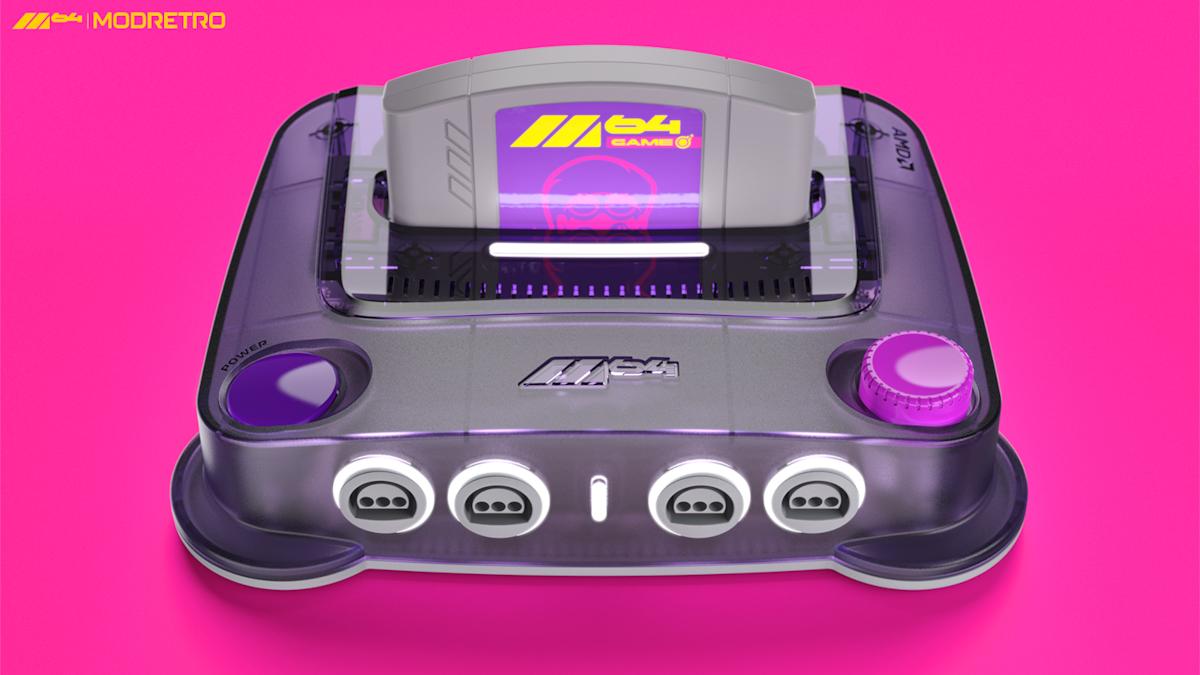
ModRetro has unveiled the M64, its tribute to the original Nintendo 64, revealing a console and controller that echo the 1990s classic while packing modern hardware behind a translucent shell. The announcement follows earlier teasers and confirms long-running speculation about the project.
The console design leans heavily into nostalgia. Four controller ports sit at the front, a top-mounted cartridge slot supports original N64 cartridges, and a chunky push button power switch replaces the original slider. A new addition, a dial marked “Menu,” sits beside the power button and appears intended for system navigation.
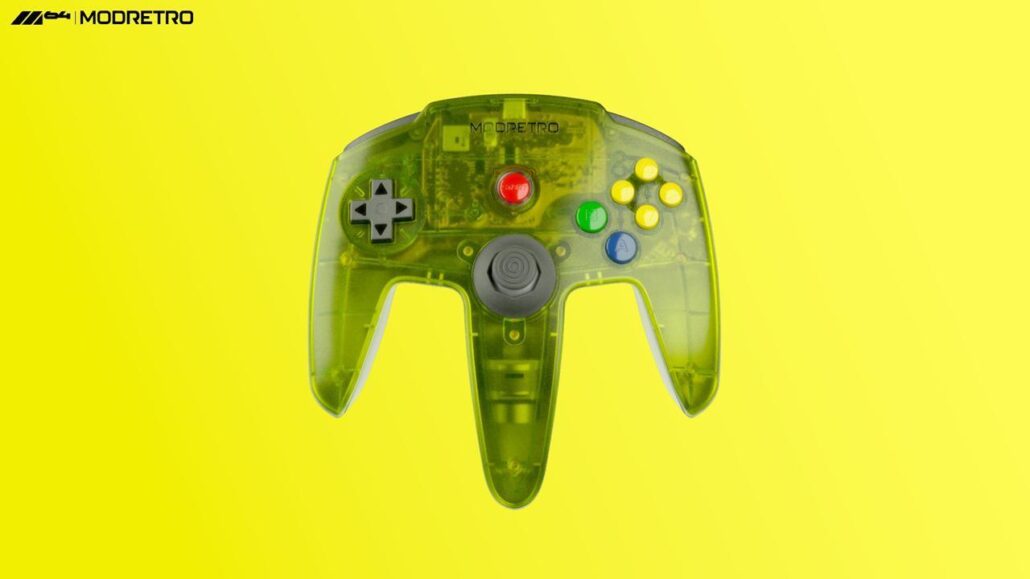
The controller mirrors the original three-pronged shape with a central thumbstick, a D-pad on one prong, face buttons on the other, and a trigger under the center grip. The translucent top and solid gray bottom give it a retro look with a modern finish.
Under the hood, the M64 uses FPGA hardware to recreate authentic N64 performance. This approach aims to deliver accurate rendering of original games while outputting over HDMI for modern TVs.
The M64 will ship in three translucent colorways, forest green, grape purple, and arctic white. Each console includes a matching controller to round out the classic aesthetic.
Pricing comes in at 199 dollars, the same launch price as the original Nintendo 64. That positions it below its largest competitor, Analogue 3D, which recently increased its price due to tariffs.
Why the M64 matters right now
Interest in retro hardware continues to grow, and multiple companies are releasing modern FPGA-based systems. Analogue 3D, the M64’s main competitor, also recreates N64 hardware but focuses on higher resolution output, variable refresh rates, and a more modern controller redesign.
Some retro fans prefer authenticity over modernization. Many feel the original controller shape is part of the N64’s identity. ModRetro is betting that players who want the original control layout, original cartridge support, and a translucent shell will choose the M64 over competing designs.
With HDMI output, FPGA accuracy, and a price under two hundred dollars, the M64 could appeal to collectors and casual gamers who want a plug-and-play N64 experience closer to the original hardware.
Here’s what we don’t know yet
ModRetro has not yet shared detailed performance benchmarks. The full purpose of the “Menu” dial has not been fully explained. Compatibility with accessories like memory cards, rumble packs, or third-party controllers also remains unclear.
Only once both consoles — M64 and Analogue 3D — reach customers will we get a clear sense of how they compare side by side. That will tell us whether M64’s nostalgia-first design outshines 3D’s higher-tech, feature-rich approach.
Once units reach early buyers, we will have a clearer sense of how the M64 performs under real-world use and whether it delivers the accuracy and nostalgia that retro players are hoping for.