
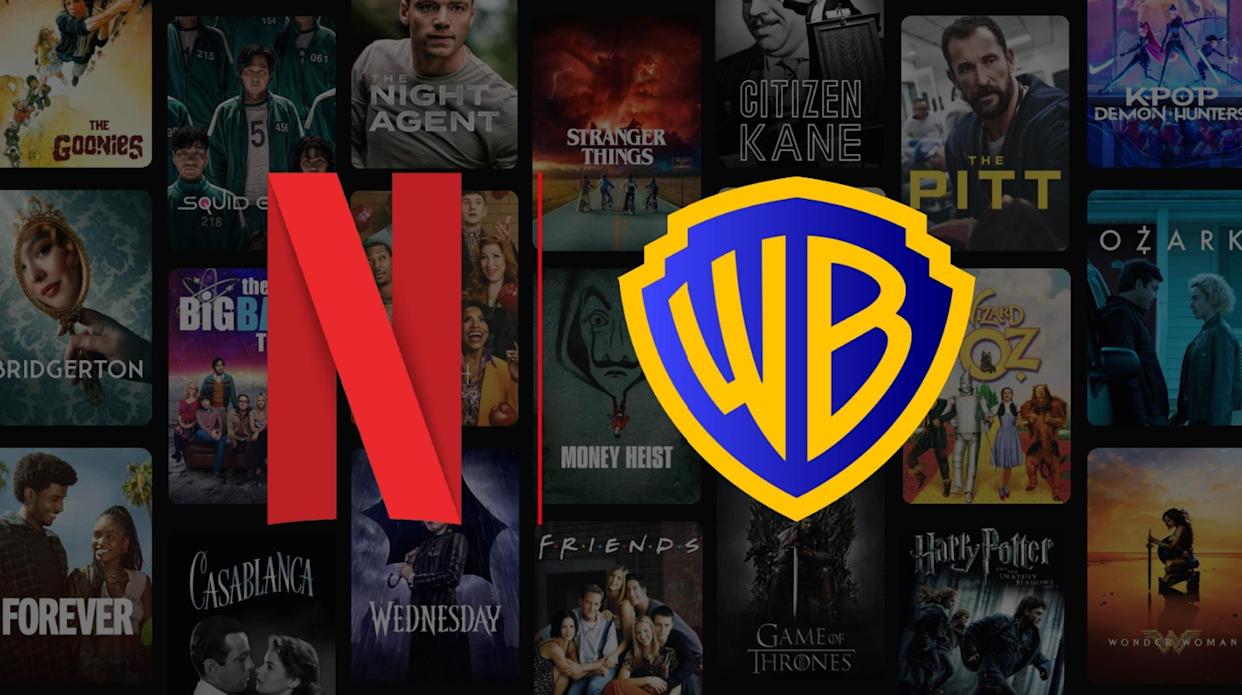
Netflix announced on December 5, 2025 that it will acquire Warner Bros., including its film and television studios, streaming properties, and major content libraries. The deal places a price tag of roughly $72 billion in equity value, or about $82.7 billion including debt and related assets. The agreement follows a planned separation of Warner Bros.’ legacy cable-network business, which will spin off into a separate company before the acquisition closes.
Under the terms of the agreement, Netflix will take ownership of Warner Bros.’ film studio, TV production, streaming business (including premium network and streaming brands), and its catalogue of films, shows, and franchises. As a result, some of Hollywood’s biggest and most culturally significant franchises — from major film series to celebrated TV shows — will join the Netflix family.
Netflix executives framed the acquisition as a strategic leap forward. In a statement they said the combination would allow Netflix to “deliver more of what audiences love,” by merging its global reach and streaming platform with Warner Bros.’ vast creative resources. The idea is that such a union will expand content offerings, strengthen production capabilities, and create more opportunities for original content and theatrical releases under the combined banner.
The companies said they expect to complete the deal after the spin-off of the cable networks — a process anticipated sometime in 2026. The acquisition remains subject to regulatory approval.
The move marks one of the largest deals in entertainment history, reshaping how content is controlled and distributed in Hollywood. For consumers, it could mean deeper access to iconic movies and shows under a unified platform. For creators and the industry at large, it signals a significant consolidation of power and storytelling infrastructure in a single company.