

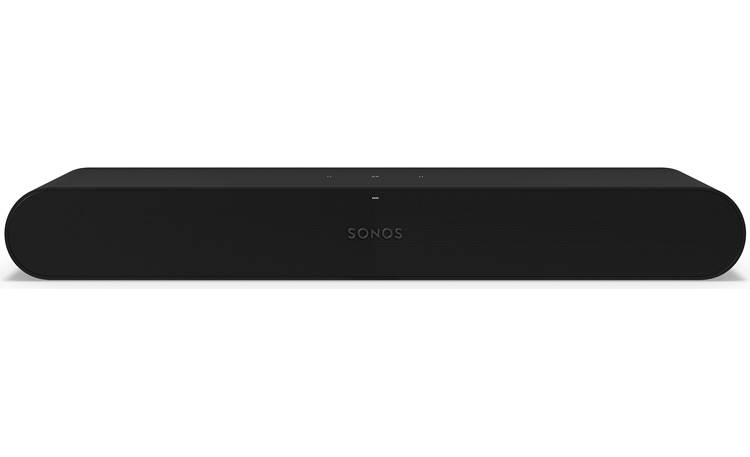
Coming in both White or Black, the Ray connects with an optical audio cable, meaning there’s no HDMI port on it. A Sonos spokesperson told me this tradeoff was because the target buyer’s TV probably has a limited number of HDMI ports and it’s not needed since there’s no Atmos support. With a lower price point it makes sense to have tradeoffs in some places.
The Ray also doesn’t have a built-in microphone. That means the Ray can only be controlled using the Sonos Voice Control experience if you own another microphone-equipped Sonos speaker that is compatible with it.
Otherwise, the Ray comes with the standard Sonos features. It works with AirPlay 2, can be controlled with the Sonos app, and connects to other Sonos devices. There’s no doubt that the $279 price will be very attractive to first-time soundbar users or even budget-conscious ones looking for higher-quality sound.


