

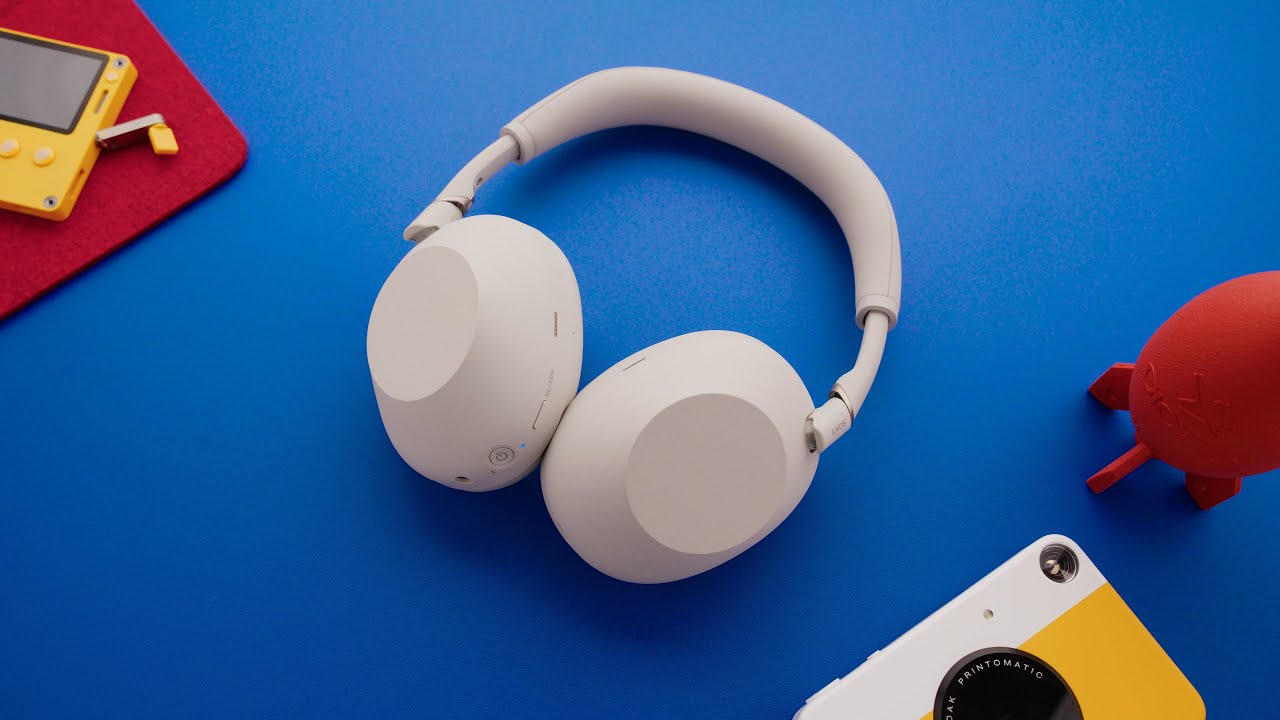
When Sony announced the WH-1000XM6, I was eager to see whether they would meaningfully outpace the XM5. I tested them for over a week across work calls, travel, music, movies, and commutes. I wanted to see whether the upgrades felt substantial in real life or just incremental. Spoiler: they’re not just incremental.
Design & Build
At first glance, the XM6 feels familiar (similar silhouette, familiar controls), but several refinements show Sony listened. The hinge returns, letting the cups fold in. That alone makes them much easier to carry. The case now uses a magnetic clasp, which feels smoother than a zipper.
The earpads and headband have been reshaped slightly to improve comfort and reduce clamping pressure while maintaining a good seal. I never felt undue pressure, even after hours. The materials feel premium. The weight is 254 grams which is noticeable compared to ultra-light models, but acceptable for daily use in my experience.
One subtle quirk: the touch controls on the earcups respond well to swipes and taps, but in gloves or cold conditions I occasionally found them less responsive. Also, since the clamping force is a bit stronger to improve isolation, shifting the cups slightly was enough to break the seal and change the sound. So getting them positioned just right mattered.
Performance & Features
One of the headline upgrades is a new noise-cancelling architecture. The XM6 integrate 12 microphones and a new QN3 processor that’s reportedly many times faster than before. That lets them react more quickly to changing sound environments, and in my tests, they handled high-frequency noise—keyboard clacks, bus chatter—better than nearly any other headphone I’ve used. (Ambient leaks were minimal.)
Ambient / transparency mode offers 20 levels of adjustment and can automatically adapt to your surroundings. I liked that voices still came through cleanly when needed.
The connectivity is robust: Bluetooth 5.3, multipoint pairing, and support for advanced codecs like LDAC and LC3. Switching between laptop and phone was smooth. The range stayed reliable even through walls.
“Cinema mode” is new: it expands stereo into a wider virtual stage in movie or TV use, giving sound more room to breathe. In practice it felt immersive, especially for dramatic scores and dialogue-heavy scenes. I used it frequently when watching shows.
Call quality is very good. Voice comes through clear, and ambient noise is suppressed effectively on both ends. In crowded environments, some background hiss surfaces, but not enough to disrupt conversation.
Sound Quality
The XM6’s tuning feels more balanced than previous models: bass is controlled, mids are clear, and highs sparkle without becoming fatiguing. The soundstage is wide enough to place instruments cleanly in space, and dynamic range felt strong. In dense tracks, detail separation held up well.
For genres like jazz or classical, the headphones did well; for heavier electronic or bass-forward music, you might use the EQ to dial up extra sub-bass. The built-in app’s 10-band EQ and presets let you adapt easily without overdoing it.
Wired listening is supported via a 3.5 mm cable. When using it, I noticed a slight boost in clarity, especially in the upper mids, though the difference was subtle in many casual listening scenarios.
Battery & Longevity
Sony rates the XM6 for 30 hours with ANC active. In my tests, they lasted slightly more. I got around 32 to 33 hours in moderate use, including calls, music, and ambient toggling. That’s strong performance and gives confidence for multi-day trips.
Charging is reasonable: a full recharge takes about 3.5 hours. A quick charge of 3 minutes gives you a few hours of playback, which is handy in a pinch.
Long-term durability seems more assured now that the hinge returns and the overall construction feels sturdier. I felt less cautious about daily wear and tear than I have with previous models.
Price Tag & Value
The WH-1000XM6 carry a premium price which is to be expected for flagship Sony gear. When buying them, you’re paying for class-leading noise canceling, mature software, and smart features not found in many rivals.
If you compare to competitors, some trade sound for lowers cost or offer fewer extras. The XM6 justify the price more for someone who uses ANC often, travels, or works in variable noise environments. But for casual users who wear headphones in quiet settings, the extra investment may feel overkill.
Pros
- Top-tier noise canceling across frequencies
- Balanced and detailed sound tuning
- Comfortable for long sessions with thoughtful adjustments
- New foldable hinge and better carry case
- Cinema and spatial modes add immersive value
- Strong battery life and quick charging
Cons
- Touch controls less responsive in gloves
- Seal is sensitive—small misalignments shift sound
- Price is steep relative to less feature-rich alternatives
- Wired mode yields only modest gains
- No water resistance rating
Verdict
The Sony WH-1000XM6 set a new standard for flagship noise-canceling headphones. They blend technical sophistication, practical features, and refined audio into one compelling package. The upgrades feel meaningful, not superficial. If you demand silence, clarity, and immersive listening in real-world settings, these are as close to perfect as I’ve used. They aren’t cheap, but for many heavy users, they’ll feel worth every dollar.
Overall Score: 9.2 out of 10


