

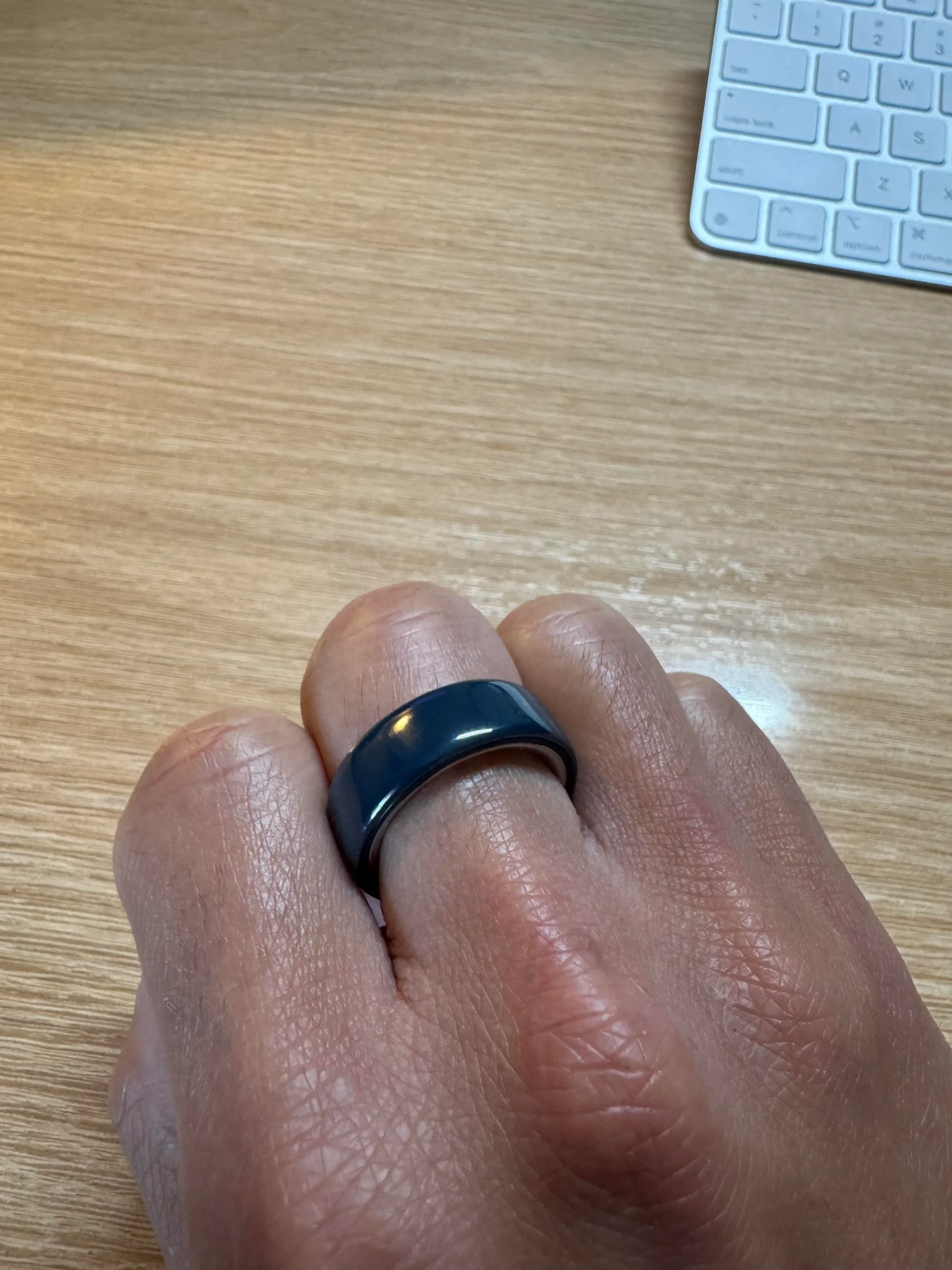
I have tried a lot of wearables, but the Oura Ring 4 Ceramic is the first one that truly disappeared on my hand while still feeding me an almost ridiculous amount of data. I wore it day and night for sleep, work, workouts, lazy days, and a few high stress stretches to see if it could keep up with real life instead of lab conditions.
What I wanted to know was simple: Is this smart ring good enough to replace or complement a smartwatch, and is all that tracking worth the subscription and the commitment to wearing it 24/7? After living with it, I would say yes for the right person, with a few clear tradeoffs you should know about.
DESIGN AND COMFORT
The Ceramic version is the one that finally made the Oura Ring feel like something I would actually want to wear as jewelry, not just tolerate as a gadget. The finish looks clean and refined in person, with a smooth surface that does not scream “tech” at a glance. Underneath the ceramic exterior you still get the same titanium structure as the standard Ring 4, so it stays light and sturdy.
The ring is noticeably slimmer and lighter than older generations. Width is about 7.9 mm, thickness is under 3 mm, and the weight ranges roughly from a little over 3 grams to a bit over 5 grams depending on size, which is lighter than most metal bands I own.
I wore it while typing, carrying bags, lifting light weights, and sleeping. It never dug into my finger or caught on my pocket the way chunkier rings sometimes do. The inside contour is smooth, and there are no harsh ridges around the sensor area. After a few days I only noticed it when I intentionally checked my hand.
The Ceramic finish also holds up better than I expected. After days of wearing it while cooking, washing dishes, and hitting the gym, there were no obvious scratches or chips. Long term reviewers who have logged over a thousand hours on the Ceramic version say it still looks nearly new, which gives me more confidence about daily use.
The size range is another positive. Oura now offers sizes from 4 to 15, which is a wider spread than many rings or smart bands. The sizing kit is worth using if you are in between sizes, since a ring that is slightly off can affect readings and comfort.
SENSORS AND WHAT IT TRACKS
The Oura Ring 4 Ceramic is a health tracker first and a “step counter” second. Inside this tiny band you get:
• Optical sensors that track heart rate, heart rate variability, and blood oxygen.
• A temperature sensor that watches small changes in skin temperature over time.
• An accelerometer for movement, activity, and automatic workout detection.
In daily use, that translates into a lot of different scores and trends:
Sleep tracking
The sleep tracking is the star of the show. Every morning, I woke up to a breakdown of total sleep, time in light, deep, and REM stages, plus how long it took me to fall asleep and how many times I woke up. The “Sleep Score” combines all that into a single number that is easy to glance at, but the detail is there if you want it. I found the wake times and total sleep surprisingly accurate compared with how I felt and what I remembered from the night.
Readiness and recovery
The Readiness Score is Oura’s way of telling you if your body is ready for a hard day or if you should pull back. It factors in sleep, resting heart rate, heart rate variability, temperature, and prior activity. On mornings after short sleep or late-night screen time, the ring gently called me out. On days where I rested well and kept my stress lower, the readiness score climbed, and I did feel better in workouts and focus.
Daily activity and workouts
Oura is not trying to be a full running watch. It does not have built-in GPS, so it relies on your phone for location when you track runs or walks. What it does well is overall activity tracking: steps, movement streaks, and a daily activity goal based on your recent recovery and sleep. The automatic workout detection picked up brisk walks, some strength sessions, and cycling without much effort on my part.
Stress and daytime load
Newer software updates add more stress and daytime strain tracking. You see how your body responds to meetings, travel, or long work blocks based on heart rate and HRV patterns. On days where I had back-to-back calls and skipped breaks, the app painted that picture clearly, even when I tried to convince myself I was “fine.”
Women’s health and cycle tracking
For people who menstruate, Oura layers cycle tracking and period predictions on top of temperature patterns and recorded symptoms. It is not a medical device, but it can help you spot cycle phases and trends over time, which can be useful for planning training or understanding energy shifts.
HOW ACCURATE DOES IT FEEL?
No consumer wearable is perfect, but the Oura Ring 4 Ceramic feels impressively consistent. Night after night, sleep timing and overall trends lined up with how I felt in the morning. Overnight heart rate and HRV matched the general pattern I see on a good smartwatch.
Where it struggled a bit was during intense, high-movement workouts. Because the sensors sit on the finger, quick motions or grip-heavy exercises can slightly throw readings off compared to a tight chest or wrist strap. For long runs or steady-state cardio it still held up well, but I would not treat it as your only workout heart rate source if you train by zones.
The strength of the ring is not single-moment readings. It is patterns over days and weeks. That is also where it asks the most from you: you have to wear it nearly all the time to get the full picture. Reviewers and users who put it on and only wear it occasionally tend to walk away underwhelmed, but the people who keep it on see meaningful trends in sleep, energy, and stress.
BATTERY LIFE, CHARGING, AND APP EXPERIENCE
Battery life is one of the main reasons the ring works as a 24/7 device. Oura rates the Ring 4 for around 5 to 8 days on a charge, depending on size and settings. In my use, with continuous heart rate, all the advanced metrics, and several tracked workouts, I consistently landed in the 6 to 7 day range.
Charging is simple. I dropped it on the small charger while showering or working at my desk and rarely felt like I “lost” it for long. Going from low battery back to full typically took around an hour and change. That makes it easy to keep on round the clock without scheduling your entire life around a charger.
The Oura app is where everything comes together. It is available for iOS and Android, syncs quickly, and gives you:
• Daily Sleep, Readiness, and Activity scores.
• Trend graphs for heart rate, HRV, temperature, and activity.
• Guided content for breathing, rest, and stress.
• Integrations with Apple Health, Google Fit, and other platforms.
There is a lot of data here, and I think Oura walks a fine line between useful and overwhelming. If you like numbers, you will have plenty to tap into. If you want simple guidance, you can mostly stick to the three main scores and the occasional nudge. A few screens still feel a bit crowded, but you get used to the layout after a week or two.
DON’T FORGET THE SUBSCRIPTION
The hardware is only half the story. To get the full set of features, you need an Oura Membership, which runs about six dollars a month or a discounted yearly rate. Without it, you lose most of the insights and detailed trend views.
If you see this ring as a long-term health companion, the membership cost is easier to justify. If you just want a simple step counter or occasional sleep check, the subscription will feel like overkill. Personally, I think the value is there if you care about long-term trends in sleep, recovery, stress, and cycles more than you care about a single data point on a given day.
REAL WORLD, DAY TO DAY
After the first week, the Oura Ring 4 Ceramic settled into my life in a way that felt natural:
• At night it quietly tracked sleep, breathing, and heart rate without a glowing screen on my wrist.
• During the day it nudged me when my activity was trending low or when my recovery was lagging.
• On stressful days it confirmed what I already felt but did not want to admit, and on good days it reinforced the habits that helped.
The biggest shift was awareness. I started to notice how late caffeine, late meals, and late scrolling affected my next morning. I could see how a short walk break or earlier bedtime paid off. The ring did not “fix” anything by itself, but it removed excuses by making the patterns obvious.
PROS AND CONS
Pros
• Very comfortable, lightweight design that works as actual jewelry, not just a gadget.
• Strong sleep and recovery tracking with clear trends over time.
• Tracks over 50 health metrics and surfaces them in simple daily scores.
• Solid 5 to 8 day battery life that supports true 24/7 wear.
• Ceramic finish and titanium build feel durable and premium.
• Wide size range and color options to fit more hands and styles.
Cons
• Requires a paid subscription for most of the useful insights.
• Needs consistent 24/7 wear for the data to make real sense.
• Heart rate during intense, high-motion workouts can lag behind dedicated sports devices.
• App can feel dense if you do not enjoy digging into health data.
• Price is high compared with basic fitness bands and some smartwatches.
VERDICT
This is one of the few wearables that truly fits around your life instead of demanding attention all day. The comfort, battery life, and depth of sleep and recovery tracking make it one of the best options if you care more about long-term health trends than step trophies. The price and subscription are real drawbacks, and it is not a perfect replacement for a dedicated sports watch, but as a quiet, always-on health partner, it delivers in a way that a lot of wrist devices still do not.
If you are willing to wear it all the time and use the data to nudge your habits, the Oura Ring 4 Ceramic earns its place on your hand.