

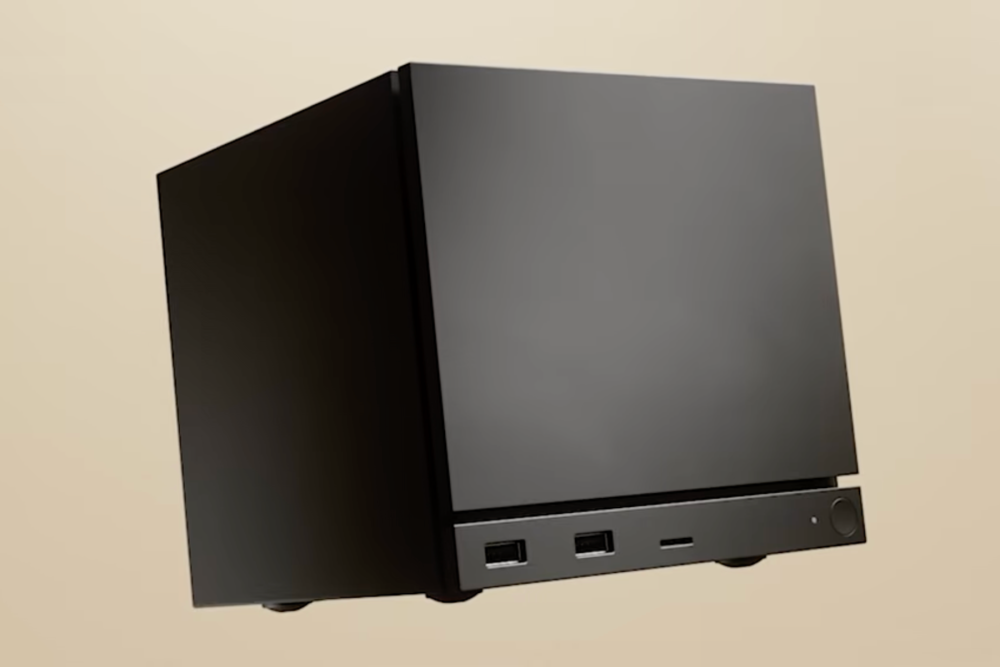
Valve might have finally built the console everyone keeps saying they want but no one has managed to ship. The new Steam Machine feels like a living-room box with console simplicity, PC flexibility, and a library that already feels bottomless.
It is not just “Steam Deck for your TV.” This tiny cube runs SteamOS on a custom AMD CPU and GPU combo with 16 GB of DDR5 memory and up to a 2 TB NVMe SSD. Valve openly says it targets 4K at 60 frames per second with upscaling, and early hands-on impressions suggest it is several times faster than the original Steam Deck.
On paper, that puts it in the same arena as current high-end consoles. In practice, it might be something more disruptive to Sony and Microsoft. It behaves like a console when you want simplicity, but underneath, it remains a real computer.
Where the Steam Machine shines is in how purpose built it feels. The case is mostly cooling and airflow, designed to sit quietly beside a TV instead of roaring like a gaming tower. Ports are practical. You get front-facing USB, a microSD slot, internal NVMe storage you can upgrade, and a built-in power supply so there are no massive bricks lying around the living room.
The concept is simple. This is the couch endpoint for your Steam library. If you already have a Steam Deck or plan to pick up Valve’s new VR hardware, your library moves with you. Even your microSD card can jump between devices with your installed games ready to run. Consoles still do not offer that kind of continuity.
SteamOS is also mature in a way that surprises people. Proton has turned a huge portion of PC games into plug-and-play experiences on Linux. The Deck proved that everyday players do not care what OS exists under the hood as long as performance is good and the system behaves like a console. The Steam Machine inherits that progress. You turn it on, pair the new Steam Controller, and start playing. It is still a PC under the surface, but no one in the living room needs to think about that.
Where it edges toward “ultimate console” territory is in the freedoms consoles never give you. You are not locked into a single storefront. You are not forced to buy the same title twice for different generations. Your entire Steam library, stretching back decades, theoretically follows you across hardware. Mods work. Settings are yours to adjust. If you want to plug in a keyboard and treat it like a small desktop, you can. Valve is starting from the openness that other platforms have spent years slowly creeping toward.
Even the hardware tradeoffs feel deliberate. The GPU has a modest amount of VRAM by desktop standards, and some online chatter has panicked about that, but FSR and sensible settings make that concern less dramatic. Valve is targeting a balance between power, heat, and price, not chasing extreme specs to justify the label on a retail box.
There are real limitations. Anti-cheat compatibility is still a pain point for Linux systems, and a handful of competitive games will require installing Windows instead of relying on SteamOS. But that is the beauty of the hardware. You can install Windows if you want to. You never have that option on traditional consoles.
Price remains the biggest question. Valve has signaled that it wants the Steam Machine to be as affordable as possible, but affordability in PC-class hardware is always a moving target. Even so, Valve’s business model favors getting more people inside the Steam ecosystem rather than making huge margins on hardware. If lowering the price helps do that, Valve has every incentive to go aggressive.
Looking at the bigger picture, Valve now has a hardware lineup that connects in a way no one else has fully achieved. Steam Deck for portable gaming. Steam Machine for the living room. Steam Frame for VR. A new Steam Controller that ties it all together. It is easy to imagine a player bouncing between devices without thinking about where the game is installed. That is the dream console makers have been promising for years. Valve might be the one closest to delivering it.
Is this truly the “final console”? Probably not. Nothing ever is. But it is the closest attempt yet at merging the openness of PC gaming with the convenience of a console. It is small, quiet, powerful enough, familiar to console players, liberating to PC users, and backed by a storefront people already trust.
If Valve nails the price and keeps SteamOS compatibility moving forward, the Steam Machine will not just be another box under the TV. It could be the moment the old line between “PC” and “console” finally stops mattering.