
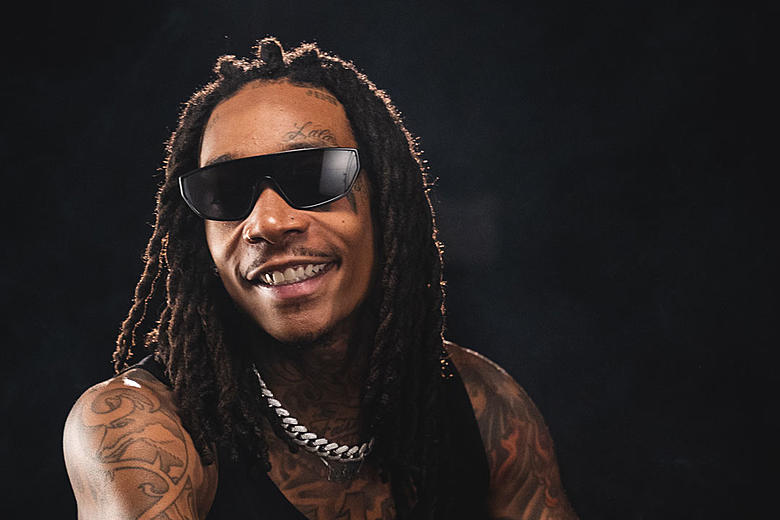
American rapper Wiz Khalifa has been sentenced to nine months in prison by a Romanian court after being convicted of drug possession in connection with an incident during a music festival performance in July 2024. The sentence was handed down on December 18, 2025, by the Constanța Court of Appeal, and it marks a significant escalation from an earlier, lighter penalty.
The case stems from Khalifa’s appearance at the Beach, Please! Festival in the Romanian seaside resort of Costinești, where he was seen smoking cannabis onstage during his set. Romanian police detained him at the time and said authorities found him with more than 18 grams of cannabis in his possession. Under Romanian law, possession of cannabis is a criminal offense, even for personal use, and carries possible prison terms ranging from three months to two years, or fines.
Earlier in 2025, a lower court had fined Khalifa 3,600 lei (roughly $830) for illegal possession of drugs rather than imposing jail time, but prosecutors appealed, arguing the original penalty was too lenient. The appellate court agreed and imposed a nine-month prison sentence, which under Romanian law is final and cannot be appealed. The conviction is specifically for “possession of dangerous drugs, without right, for personal consumption.”
Khalifa, whose real name is Cameron Jibril Thomaz, is not currently in Romania and remains in the United States. It is unclear whether Romanian authorities will pursue extradition, a complex and uncommon step for cases of personal drug possession, especially involving a U.S. citizen who does not reside in Romania. Legal experts and commentators have noted that extradition in such cases is unlikely, and Romanian criminologists have suggested that the chances of U.S. authorities turning over Khalifa are very low.
The ruling has drawn global attention because Khalifa is a high-profile artist whose career has been closely associated with cannabis culture. He first rose to prominence with his breakout mixtape Kush + Orange Juice and went on to have mainstream hits such as Black and Yellow and Young, Wild & Free. His music and public persona openly embrace marijuana, making the Romanian sentence notable for contrasting sharply with attitudes in parts of the United States and other countries where cannabis has been decriminalized or legalized.
At the time of the original incident, Khalifa posted on social media that he was treated respectfully by Romanian authorities and joked about returning to perform in the country — but “without a big joint next time.” The cultural reaction to the sentence has been mixed, with some fans expressing surprise at the severity of the punishment and others underscoring the importance of respecting local laws when performing abroad.
Romania’s strict drug laws have drawn comparisons with other European jurisdictions, many of which differentiate between personal use and distribution or have moved toward decriminalization. Khalifa’s case has reignited conversations about the legal risks international performers face when touring in countries with harsher penalties for drug-related offenses, even when the quantities involved are relatively small.
As it stands today, no official extradition request has been publicly announced, and it remains to be seen if Khalifa’s legal team will pursue options to challenge or mitigate the sentence. For now, the nine-month term stands as a reminder of how differently nations approach drug enforcement, and it highlights the potential legal consequences entertainers may encounter when local laws sharply diverge from the norms in their home countries.